Hiding in Plain Sight: Why Gen Z Has Mastered the Art of the Almost-Announcement
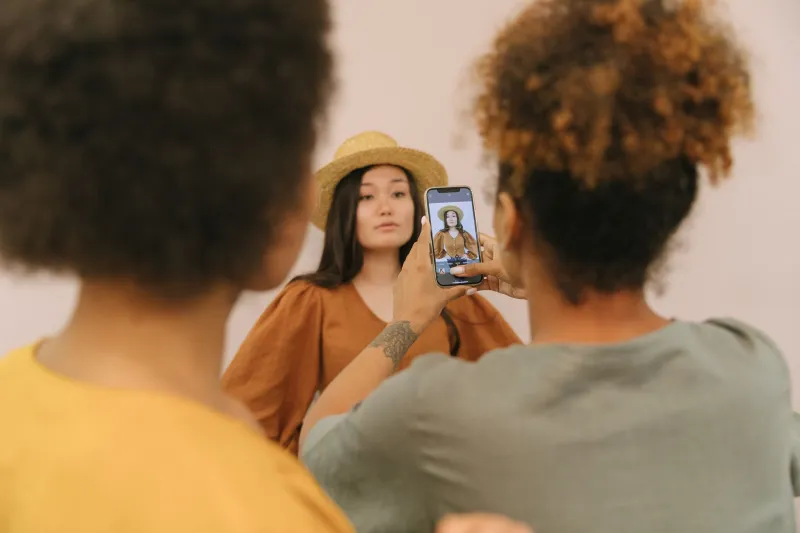
There's a hand in the corner of the photo. It's not centered. It's not the point — or at least, that's what you're supposed to think. But everyone who sees it knows exactly what it means. Someone new is in the picture, literally and figuratively, and the person posting it wants you to notice without admitting they want you to notice.
This is the soft launch. And if you've spent any real time on Instagram or TikTok in the last few years, you've either done it, witnessed it, or been the subject of someone else's.
The concept isn't brand new — celebrities have been teasing relationships and projects forever — but Gen Z has turned it into a full-blown social ritual. New job? Post a vague mirror selfie in business casual. New apartment? Let the unfamiliar wall art speak for itself. New relationship? A blurry background cameo in a Story will do just fine. The official announcement, if it ever comes, is almost beside the point.
The Control Paradox
Here's where it gets genuinely interesting: the soft launch is framed as privacy, but it's actually the opposite. Real privacy would be saying nothing at all. Instead, the soft launch is a carefully engineered leak — just enough information to generate curiosity, not enough to invite full scrutiny.
It's control dressed up as restraint.
For a generation that grew up watching influencers overshare everything and then get destroyed for it, the soft launch feels like a smarter play. You get the social validation of people noticing your life is changing without fully exposing yourself to judgment before you're ready. If the relationship falls apart next week, you never officially announced it, so you never have to officially un-announce it. The ambiguity is a built-in escape hatch.
Psychologists who study social media behavior have noted that this kind of strategic self-presentation isn't unique to young people, but Gen Z has refined it into something almost artful. There's a real skill involved in crafting a post that reads as casual while being anything but. The lighting, the crop, the caption (or deliberate lack of one) — it's performance disguised as spontaneity.
FOMO Has a New Form
There's another layer here that doesn't get talked about enough: the viral window problem. Social media moves fast, and everyone knows that the "first" version of a story gets the most traction. If you wait too long to let people in on a major life change, you risk someone else breaking it first — a mutual friend's comment, a tagged photo, a background detail in someone else's content.
So the soft launch is also a preemptive strike. You control the debut of your own narrative before the internet can do it for you. It's not just about looking cool or mysterious. It's about owning the story in an environment where stories can slip away from you in seconds.
This is especially true for anyone with even a modest following. When you have thousands of people watching your content regularly, they notice changes. A new person appearing in your background isn't subtle to an audience that has memorized your apartment layout. Soft launching lets you acknowledge that they noticed without fully breaking the fourth wall.
The Status Symbol Nobody Talks About
There's a reason soft launching has become aspirational. Think about it: you can only soft launch something worth soft launching. A new relationship, a new job, a new city — these are things that signal your life is moving. The soft launch implies you have news. And having news, in the social media economy, is currency.
Posting a blurry photo of someone's hand isn't humble. It's a flex wrapped in plausible deniability. It says: something good is happening in my life, and I'm not ready to tell you what it is yet. That "not yet" is doing a lot of work. It positions you as someone with exciting things in the pipeline, someone whose life has chapters still unwritten.
Compare that to the person who announces everything immediately, with full context and zero mystery. That approach reads as eager. The soft launch reads as unbothered — even when an enormous amount of bother went into crafting it.
When the Soft Launch Goes Wrong
Of course, it doesn't always land the way people intend. The internet's pattern-recognition is sharp, and audiences have gotten very good at decoding the signals. When TikTok users started making videos specifically about spotting soft launches — the telltale signs, the classic moves, the "hand in photo" checklist — they kind of broke the spell a little.
Once everyone knows the playbook, the strategy loses some of its mystique. Now, a blurry arm in the background doesn't just read as mysterious — it reads as someone doing the soft launch thing. The meta-awareness has become part of the culture itself, to the point where people soft launch ironically, or post obvious soft launches as a joke, which then sometimes turn out to be real.
It's layers upon layers of performed authenticity, and honestly? It's impressive in a slightly exhausting way.
There's also the awkward scenario where the soft launch gets more attention than the official announcement ever does. The speculation, the comment sections, the "wait, who is THAT" energy — sometimes that's the peak. By the time the full reveal happens, the internet has already moved on to the next mystery.
What This Actually Says About Us
Strip away the social strategy and the aesthetic choices, and the soft launch is really just a very modern response to a very human problem: we want connection and recognition, but we're terrified of vulnerability. We want people to care about our lives without giving them too much access to actually hurt us.
That tension isn't a Gen Z invention. But the tools Gen Z has to navigate it — the Stories, the close friends lists, the cropped photos — are new, and so the behavior has evolved into something previous generations wouldn't quite recognize.
In a weird way, the soft launch is kind of sweet. It's people trying to share joy before they're sure it's going to last. Wanting witnesses without wanting judges. Reaching out while keeping one foot safely back.
The wave of digital life keeps moving, and the soft launch is how a lot of people are learning to ride it without wiping out. Whether that's clever or just a little sad probably depends on what's hiding in the corner of the photo.