Scroll, Drop, Repeat: How TikTok Broke the Album and Rewired How We Listen
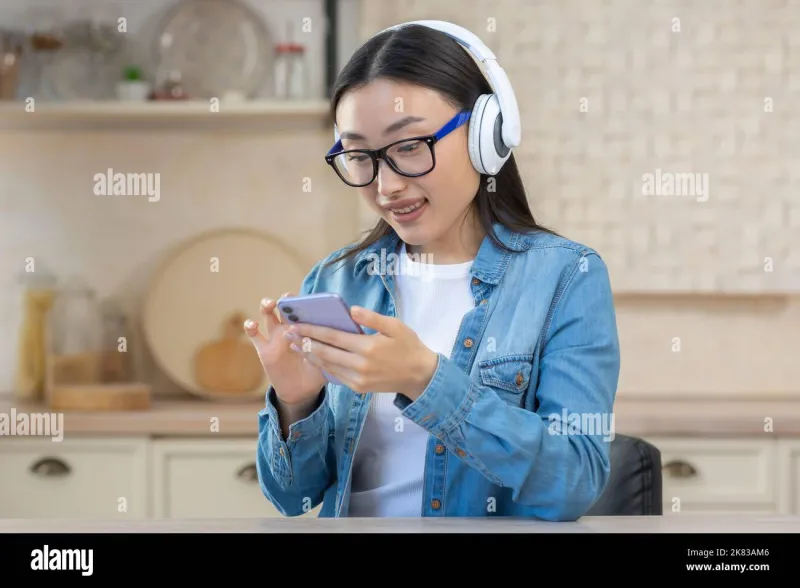
Photo: person scrolling TikTok on phone with headphones music, via c8.alamy.com
There was a time when dropping an album meant something. You waited for it. You sat with it. You listened from track one straight through to the closer, and somewhere around the third song you started to understand what the artist was actually trying to say. That ritual? It's hanging by a thread.
Today, a song lives or dies in the first seven seconds — not because of radio programmers or label executives, but because of a teenager in Ohio with a fast thumb and a For You Page that refreshes every few minutes. TikTok didn't just change how music gets discovered. It changed what music gets made.
The Hook Economy
Ask anyone working in music production right now and they'll tell you the same thing: the brief has changed. Where a producer used to think about an album's arc — how a slow burn of a track might pay off three songs later — the conversation now starts with "what's the moment?"
That "moment" is the sonic hook, the lyric fragment, the beat drop that's designed to soundtrack a dance trend, a lip sync, or a 15-second montage of someone's morning routine. Everything else in the song is essentially scaffolding.
Streaming data backs this up. According to multiple industry analyses, the average listener on platforms like Spotify and Apple Music bails on a track within the first 30 seconds if it doesn't grab them — and that number has been shrinking year over year. TikTok didn't create short attention spans, but it absolutely turbocharged them.
For emerging artists trying to break through, this creates a brutal calculation. Do you spend six months crafting a cohesive 12-track project that tells a story, or do you drop a series of standalone singles engineered to go viral and build an audience first? The math, unfortunately, usually points in one direction.
Artists Caught in the Algorithm
Some artists have leaned all the way in. A growing wave of pop and hip-hop acts now essentially reverse-engineer their releases — identifying a catchy phrase or a danceable beat, building a TikTok strategy around it, and then filling out the rest of the song as an afterthought. It's a legitimate hustle, and for many it's worked. Careers have been launched on the back of a single trending audio clip.
But there's a cost. Artists who blow up via TikTok often find themselves trapped in a weird paradox: their audience loves the 15-second version of them, but isn't necessarily interested in anything deeper. When those same artists try to release more personal, slower, or structurally complex work, engagement tanks. The algorithm trained their listeners to expect a hit on demand, and anything that doesn't deliver that feels like a betrayal.
On the flip side, a growing number of musicians are actively pushing back. Indie and alternative acts in particular have started framing the album not just as a product but as a statement of resistance — a deliberate refusal to break their work into digestible content. Some have gone out of their way to release albums with no singles, no advance TikTok teasers, and no "moment" designed for virality. It's a bold move that tends to earn critical respect and a loyal fanbase, even if the streaming numbers don't always reflect it.
What the Data Actually Says
Here's where it gets complicated. For all the talk about albums dying, they haven't disappeared — they've just become a different kind of cultural object. When a major artist drops an album that genuinely resonates (think Beyoncé's Cowboy Carter or Taylor Swift's The Tortured Poets Department earlier this year), the internet doesn't ignore it. It obsesses over it, track by track, lyric by lyric, in a way that feels almost old-school.
But those moments are increasingly rare, and they tend to involve artists who already have massive, deeply invested fanbases. For everyone else, the album is more likely to function as a press vehicle — a way to generate a news cycle — than as a piece of art meant to be experienced as a whole.
Streaming analytics also reveal something a little uncomfortable: most listeners who "save" an album only regularly return to two or three tracks from it. The rest gets skipped. The playlist has effectively replaced the album as the primary listening format for a huge chunk of the audience, and playlists, by definition, have no narrative arc.
The Slow Burn Isn't Dead — It's Just Harder
None of this means long-form music is finished. It means it has to fight harder for attention in a landscape that's structurally designed to reward the instant. Some artists are finding creative ways to navigate that tension — releasing a viral single as a gateway, then using the audience it brings to introduce more layered work. Others are leaning into album rollouts that are themselves content, turning the anticipation into a story that plays out across social media over weeks.
The artists who seem to be thriving are the ones who understand TikTok without being owned by it. They know how to play the game without letting the game define everything they make.
For listeners, the shift is worth paying attention to. There's something genuinely different about the experience of sitting with an album — letting it unfold, letting the slower tracks land — versus consuming music as a stream of individual moments. Both have value. But one of them is getting a lot less practice.
The album era isn't dead. It's just competing with a format that never runs out of new things to show you. And that, honestly, might be the harder fight.