The Exhausting Art of Looking Like You're Not Trying

Photo by Photo by Helena Lopes on Unsplash on Unsplash
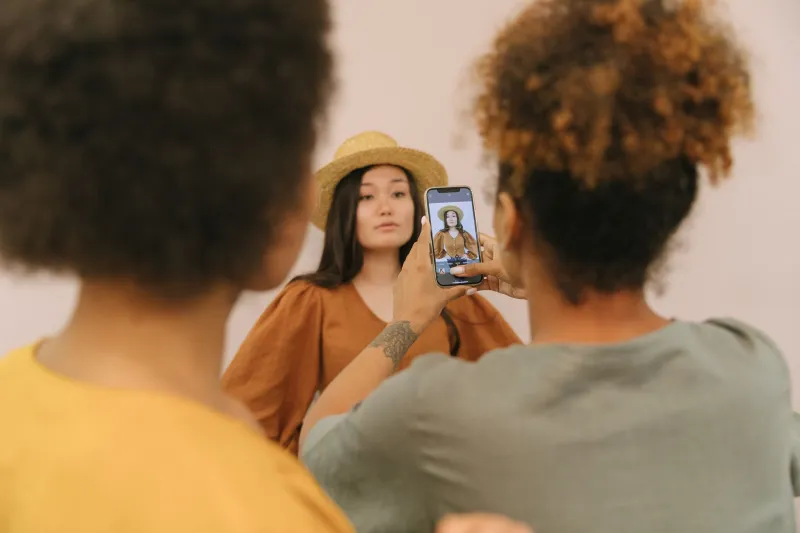
There's a photo you've definitely seen. Maybe it's a girl sitting cross-legged on her bed, morning light hitting just right, coffee mug in hand, hair in that perfect undone bun. The caption says something like "slow mornings 🤍" and it has 47,000 likes. What the caption doesn't say is that she woke up at 6 a.m., repositioned the mug eleven times, retook the photo on three different devices, and spent twenty minutes in Lightroom before posting it at the algorithmically optimal hour of 8:47 a.m.
Welcome to the age of curated authenticity — where looking real is the most manufactured thing on your feed.
When 'Real' Became a Brand Strategy
Somewhere between the peak of heavily filtered selfies and the backlash that followed, social media users landed on a new aesthetic ideal: the unfiltered filter. The polished mess. The relatable moment that somehow still looks gorgeous. It's not a coincidence — it's a response to audiences growing increasingly skeptical of picture-perfect content.
Research has consistently shown that US consumers trust peer recommendations and "authentic" voices over traditional advertising. Brands caught on, influencers adapted, and suddenly being real was the most strategic move you could make. The problem? Authenticity, once it becomes a strategy, stops being authentic.
Content creators started studying what "real" looked like and reverse-engineering it. Slightly wrinkled linen sheets. A half-eaten snack left in frame. Laughing mid-sentence in a video. These aren't accidents — they're decisions, often deliberate ones made after reviewing what performed well the week before.
The Invisible Labor Nobody Talks About
For creators building audiences on Instagram or TikTok, the mental overhead of maintaining this balance is significant. It's not just about taking a good photo anymore. It's about calibrating exactly how good the photo should look — polished enough to seem aspirational, rough enough to seem real.
Creators describe a kind of constant self-surveillance that's hard to switch off. Before posting anything, there's an internal checklist running: Does this look too try-hard? Does it look lazy? Is the caption too long? Too short? Does the lighting make it look staged? Should I add a typo to seem more casual?
That last one — the intentional typo — is perhaps the most telling detail. When you're strategically misspelling words to simulate spontaneity, you've crossed into a kind of performance art. And the audience, more often than not, doesn't even realize they're watching a show.
Audiences Are Starting to Catch On
But here's where things get interesting: they're figuring it out.
A growing wave of social media criticism — not just from media commentators, but from everyday users — is calling out the manufactured realness industrial complex. Comments like "this is so staged" or "nobody actually lives like this" are showing up more frequently under posts that once would have sailed by unchallenged. TikTok, in particular, has become a space where the deconstruction of influencer aesthetics is its own content genre.
Videos breaking down the exact techniques used to make a photo look candid — the "accidental" crop, the strategic background blur, the fake-laughing-at-nothing pose — rack up millions of views. Audiences are developing a kind of authenticity literacy, and creators who built their following on the relatable aesthetic are now navigating a more skeptical crowd.
This creates a feedback loop that's almost dizzying. Creators perform authenticity. Audiences detect the performance. Creators respond by performing an even more convincing version of authenticity. And so it goes.
The Everyday User Gets Caught in the Crossfire
Here's what often gets lost in conversations about influencers: this pressure doesn't stay on the professional side of the screen. Regular users — people who aren't monetizing their Instagram, who don't have brand deals, who are just trying to share their lives — have absorbed these same norms.
Posting a photo from your weekend now comes with an unspoken pressure to meet a certain standard. Not too filtered (that's so 2018), but not too raw either. Captions need to hit the right tone — casual but witty, personal but not oversharing. The whole thing has to look like you thought about it for thirty seconds, even if you've been stressing over it for an hour.
For younger users especially, this performance can blur into something that affects real-world self-perception. When your social media self is a carefully managed character, it gets harder to know where the character ends and you begin.
Is There an Exit Ramp?
Some creators are betting that the antidote to curated authenticity is actual authenticity — and finding real audiences for it. Accounts that post genuinely unflattering photos, share messy, unedited thoughts, or simply show up without a content strategy have carved out loyal followings built on something that feels different. The irony, of course, is that for some of them, that becomes the strategy.
There's also a quieter shift happening where some users are simply stepping back. Private accounts, close friends lists, and even the occasional full-on social media break are becoming more common as people recalibrate their relationship with the performance.
Platforms themselves are slowly responding — though not always in ways that help. Features like Instagram's "Candid" mode or BeReal's timed photo prompts were designed to inject genuine spontaneity into feeds, but users quickly found ways to game those formats too.
The Wave Isn't Stopping — But It's Changing Shape
Curated authenticity isn't going away. If anything, it's getting more sophisticated. As audiences get better at detecting the performance, creators get better at hiding it. It's an arms race with no clear winner, and the casualty in the middle is the actual, messy, unoptimized truth of how people live.
What's worth paying attention to is how this shapes the broader culture around self-presentation. We're collectively learning that "being yourself" online is a skill — one that takes practice, strategy, and a willingness to constantly second-guess your own instincts.
That slow morning photo? It might still be beautiful. The coffee might actually be good. The light might genuinely be perfect. But the moment you start calculating whether to post it, something shifts. And we're all living in that shift now, whether we've got 47,000 followers or forty-seven.