Why Some Trends Die by Sunday and Others Own the Entire Season
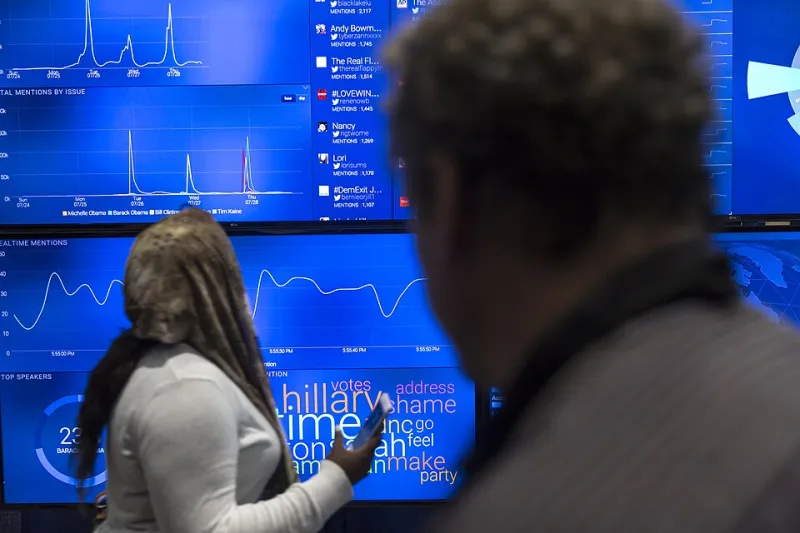
Photo: Lorie Shaull from Washington, United States, CC BY-SA 2.0, via Wikimedia Commons
Something blows up on a Tuesday. By Friday, everyone's doing it. By the following Monday, you're already tired of seeing it. And yet — somehow — other trends stick around for months, bleeding into fashion, music, memes, and mainstream conversation until they feel less like a moment and more like a movement.
So what's actually going on? Why do some things go viral and vanish while others compound and grow? The answer is a lot less random than your For You page makes it seem.
The Algorithm Isn't Just Watching — It's Deciding
Let's start with the obvious but underappreciated truth: the platforms you use every day are making active choices about which trends get oxygen and which ones quietly suffocate.
TikTok, Instagram Reels, and YouTube Shorts all use engagement velocity as a core ranking signal. That means the faster a piece of content racks up watches, shares, and saves, the more aggressively the algorithm pushes it to new audiences. This creates a feedback loop that can take something from zero to everywhere in under 48 hours.
But here's the catch: that same mechanism works against longevity. When a trend spikes too fast, it burns through its available audience quickly. The algorithm, always chasing novelty, starts redirecting attention toward whatever's generating fresh engagement signals. The original trend doesn't die because people hated it — it dies because the machine already moved on.
"There's a real ceiling effect," says one social media strategist who works with mid-size brands on trend integration. "Once a sound or format hits a certain saturation point on TikTok, the algorithm actually starts suppressing it in favor of newer content. It's almost self-regulating."
This is why trends that feel massive one week can feel dated the next — the infrastructure that made them explode is also what buries them.
Timing Is Everything (And It's Complicated)
Cultural timing is one of the most overlooked variables in trend longevity. A trend that arrives at the right moment — when audiences are primed for exactly that kind of content — has a dramatically higher chance of embedding itself into the cultural conversation.
Think about the "quiet luxury" aesthetic. It didn't just show up out of nowhere. It arrived at a moment when consumers were fatigued by maximalism and loud branding, when economic anxiety was making understated wealth feel aspirational, and when several prestige TV shows were centering old-money aesthetics. All those threads converged, and what could have been a two-week Pinterest mood board turned into a multi-season fashion obsession.
Contrast that with trends that show up at the wrong time — a dance challenge that launches the same week a major news event dominates feeds, or a meme format that requires too much context to translate across demographics. Those trends often have perfectly good mechanics but no cultural runway to build on.
Trend forecasters call this "contextual resonance" — the degree to which a trend fits into the larger emotional and cultural moment an audience is already living through. The higher the resonance, the longer the shelf life.
Audience Saturation vs. Audience Expansion
Here's a distinction that matters more than most people realize: there's a big difference between a trend that saturates its original audience and one that expands into new audiences over time.
A lot of fast-dying trends are what you might call "community-specific" — they're deeply funny or meaningful to a specific corner of the internet, but they don't have the legs to travel. Once everyone inside that community has seen it and done their version, it's over. There's nowhere left for it to go.
Longer-lasting trends tend to have what strategists describe as "translation potential." They're flexible enough to be reinterpreted across different demographics, platforms, and contexts without losing their core identity. The "girl dinner" moment is a decent example — it started as a very specific Gen Z humor beat about lazy eating, but it quickly got picked up by millennials, late-night TV, food brands, and eventually became a cultural shorthand that transcended its original audience entirely.
"The trends that last are usually the ones that give people something to add to," explains one trend forecaster who consults for entertainment and consumer brands. "They're not just content you consume — they're frameworks you can personalize. That participation is what keeps the engine running."
The Role of Cross-Platform Migration
Another key variable: where a trend lives — and whether it can move.
Trends that stay trapped on a single platform are inherently fragile. If TikTok's algorithm shifts, if a competing sound takes over, or if the platform's user base simply gets bored, there's no safety net. The trend has nowhere to migrate.
But trends that successfully jump from TikTok to Instagram to Twitter (now X) to YouTube to mainstream media coverage? Those trends build redundancy into their own survival. Each new platform introduces the trend to a fresh audience, which generates new engagement, which signals relevance to algorithms across multiple ecosystems simultaneously.
This cross-platform migration is often the difference between a trend that peaks at 10 million views and one that quietly accumulates 500 million over three months. The latter isn't necessarily more exciting in any given moment — it's just better distributed.
When Brands Jump In (And Why That Can Kill a Trend)
One of the more ironic dynamics in the trend cycle is the brand participation problem. When a trend is rising, brands desperately want a piece of it — and their involvement can actually accelerate the trend's death.
Here's why: audiences, particularly younger ones, have finely tuned sensors for corporate co-optation. The moment a trend starts showing up in brand content, it signals to the original community that the moment has been commercialized, which reads as "over." The cool factor drains almost instantly.
Strategists who navigate this well tend to move fast and stay loose — they participate in trends early, before saturation, and they do so in ways that feel native rather than manufactured. Brands that wait until a trend is everywhere, then produce a polished campaign around it, are almost always too late.
So What Actually Makes a Wave Last?
Pull it all together and a pattern emerges. The trends that outlast their initial viral spike tend to share a few qualities: they arrive at a moment of genuine cultural resonance, they're flexible enough to be personalized and reinterpreted, they migrate successfully across platforms, and they expand beyond their original community rather than burning through it.
None of that is truly accidental. The trends that feel organic and inevitable are usually the ones that hit multiple variables simultaneously — and the ones that vanish in a week almost always missed at least one.
The wave metaphor is apt here. Some waves form far out at sea, build slowly, and deliver a long, powerful ride. Others are just surface chop — impressive for a second, gone the next. The ocean doesn't play favorites. But if you understand the currents, you start to see the difference coming before it hits the shore.